
Job Scams Are Getting Smarter. And More Personal.
Three times this month alone, I have run into job scams. Not as a job seeker, but as someone working inside this industry every single day.
I have been sent “opportunities” that were clearly fraudulent, and more concerning, I have been impersonated in outreach that positioned me as part of the scam itself. Let that sink in for a moment. Imagine someone impersonating you, tricking others with your name, and sometimes even using your image? It’s implorable! And until it happens to you, you may not be thinking much of it. But you should! No one is safe.
Sadly, being aware is not just about spotting obvious red flags or bad emails anymore. Scams are now more targeted, believable, and similar to real hiring conversations. That is why more professionals from all industries and career levels are falling for them—and everyone needs to be on the lookout.
When It Looks Real, It Becomes Risky
One worrying trend is that these scams now copy real recruiting processes.
You apply for a role. A recruiter reaches out. The conversation feels aligned.
And then, somewhere along the way, you are redirected or misled.
In one recent example, a “recruiter” reviewed an application and then directed the candidate to work with a “resume writer” to move forward in the process. That writer, in this case, was not me, even though my name was used (and then “I” reached out to them to sell services):
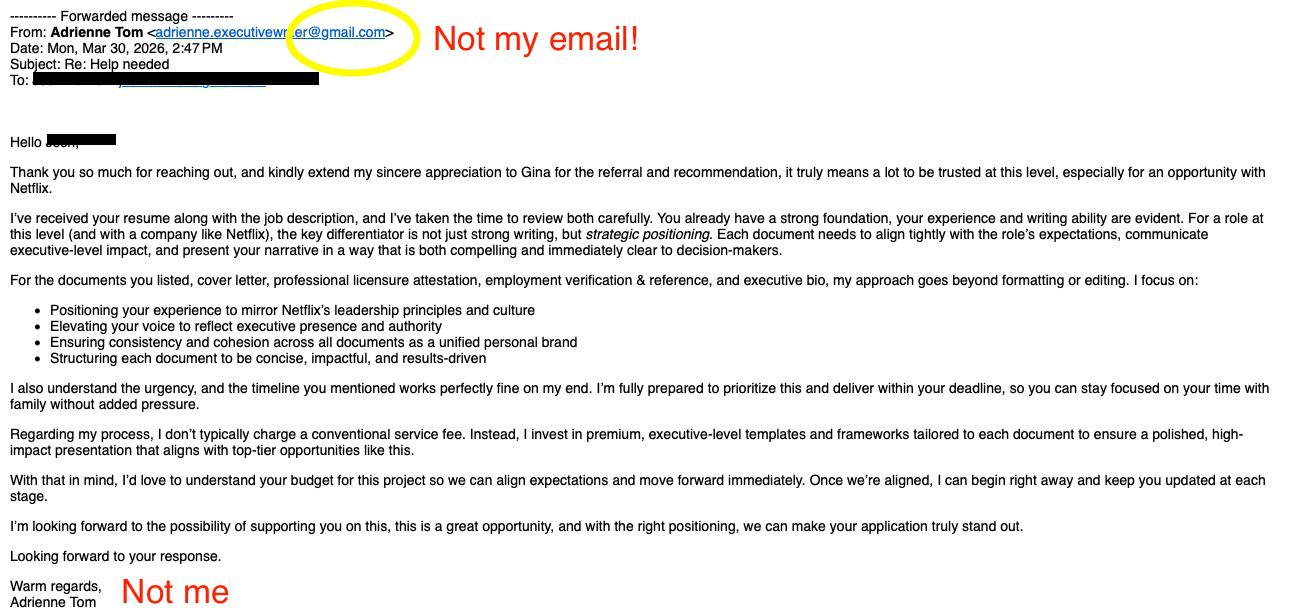
My name and positioning language were used in this email that I did not write. The email address is not mine. The services offered are not real. When people look me up online, they will see that I am a real person who offers resume writing services. The trouble is, they are not working with the real me in this situation. They are being duped and paying for services they never receive.
I want to make this clear. If a recruiter wants you to use a paid service as a condition of moving forward, you need to pause and beware.
Real recruiters will not make you pay for resume writing, coaching, or similar services to be considered for a job. They might give advice or feedback, but they will not block your chance with a fee. That is not how real hiring works. Kelli Hrvinak, a legit recruiter, shares more about this in her recent Substack post.
What I Am Seeing Firsthand
From my experience working with executives in Canada and the U.S., I am seeing a few patterns more often:
- Impersonation of real professionals or companies
- Use of generic email domains instead of company domains (Gmail is a big red flag!)
- Requests to engage third-party paid services early in the process
- Vague role details paired with high-level promises
- Communication that feels slightly off, even if you cannot immediately explain why
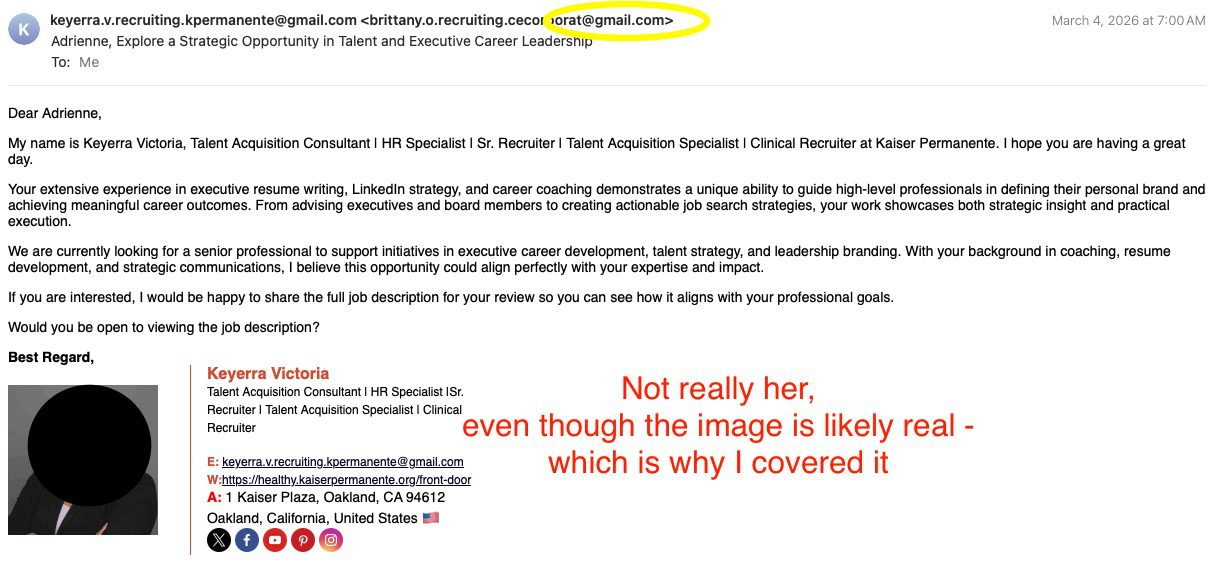
Multiple times, I have received fake emails from fake recruiters like the one below, telling me about jobs that I am the ‘perfect’ match for. The recruiter’s name is often a legitimate person (and the photo may be too), but the real person didn’t send the email. A scammer did.
Red Flags You Should Not Ignore
Here are a few basic checks to help you assess if something is real.
-
The email domain does not match the company
Most credible recruiters use a company domain email address. While there are exceptions in early-stage or boutique environments, it is rare for legitimate recruiters to operate solely through Gmail or other free accounts when representing established organizations. The same goes for me. I do not use Gmail to communicate with clients! You can verify email addresses directly through company websites or LinkedIn profiles.
-
You are asked to pay for something to proceed
According to the Federal Trade Commission, one of the most common job scam tactics is requesting payment for services, training, or materials as a condition of employment. If someone asks for money early on, take a step back.
-
The opportunity feels rushed or pressured
Scammers often create a sense of urgency to push you into quick decisions. Real hiring processes, especially at the executive level, involve multiple conversations, thoughtful evaluation, and time. Pressure is a tactic in scams and not a normal part of hiring.
-
The role lacks depth
If you cannot get clear answers about the job, who you would report to, or the business, that is a warning sign. Good roles are clear, even at the start.
-
Something feels off
This is more important than most people realize. Trust your gut. Your intuition is a good guide, and we often overlook it. If you notice any red flags, even small ones, dig into things.
What Reputable Sources Are Saying
Scams are not just happening to a few people. I know a dozen-plus people in my industry alone who are currently being impersonated in scams. Organizations such as the Better Business Bureau and AARP continue to report an increase in employment scams, particularly those involving impersonation and fake recruiter outreach.
Here are some helpful resources you should check out:
- Better Business Bureau: Avoid Job Scams
https://www.bbb.org/all/scamstudies/employment-scams - Federal Trade Commission: Job Scams and How to Avoid Them
https://consumer.ftc.gov/articles/job-scamshttps://consumer.ftc.gov/articles/job-scams - AARP: Work-From-Home and Job Scam Warnings
https://www.aarp.org/money/scams-fraud/info-2022/job-scams.html - Government of Canada — Competition Bureau (Job and Employment Scams)
- https://competition-bureau.canada.ca/en/fraud-and-scams/tips-and-advice/job-and-employment-scams
How to Protect Yourself
- Verify the recruiter through LinkedIn and the company website.
- Cross-check email domains and contact details.
- Avoid clicking on unfamiliar links or downloading attachments.
- Never share sensitive personal or financial information early in the process.
- Reach out directly through the company’s official channels to confirm legitimacy.
A Final Thought From My Side
As someone who works in executive resume writing and career positioning, I see how much trust professionals place in these conversations. You are putting your career, your personal information, and your time into what you believe is a legitimate opportunity. That trust should never be taken lightly.
The reality is that your resume, your LinkedIn profile, and your positioning are doing exactly what they are meant to do when they attract attention. But not all attention is equal. Discernment is now part of the job search. And increasingly, it is part of career management at every level.
Stay curious.
Ask better questions.
And when something does not feel right, pause long enough to investigate.
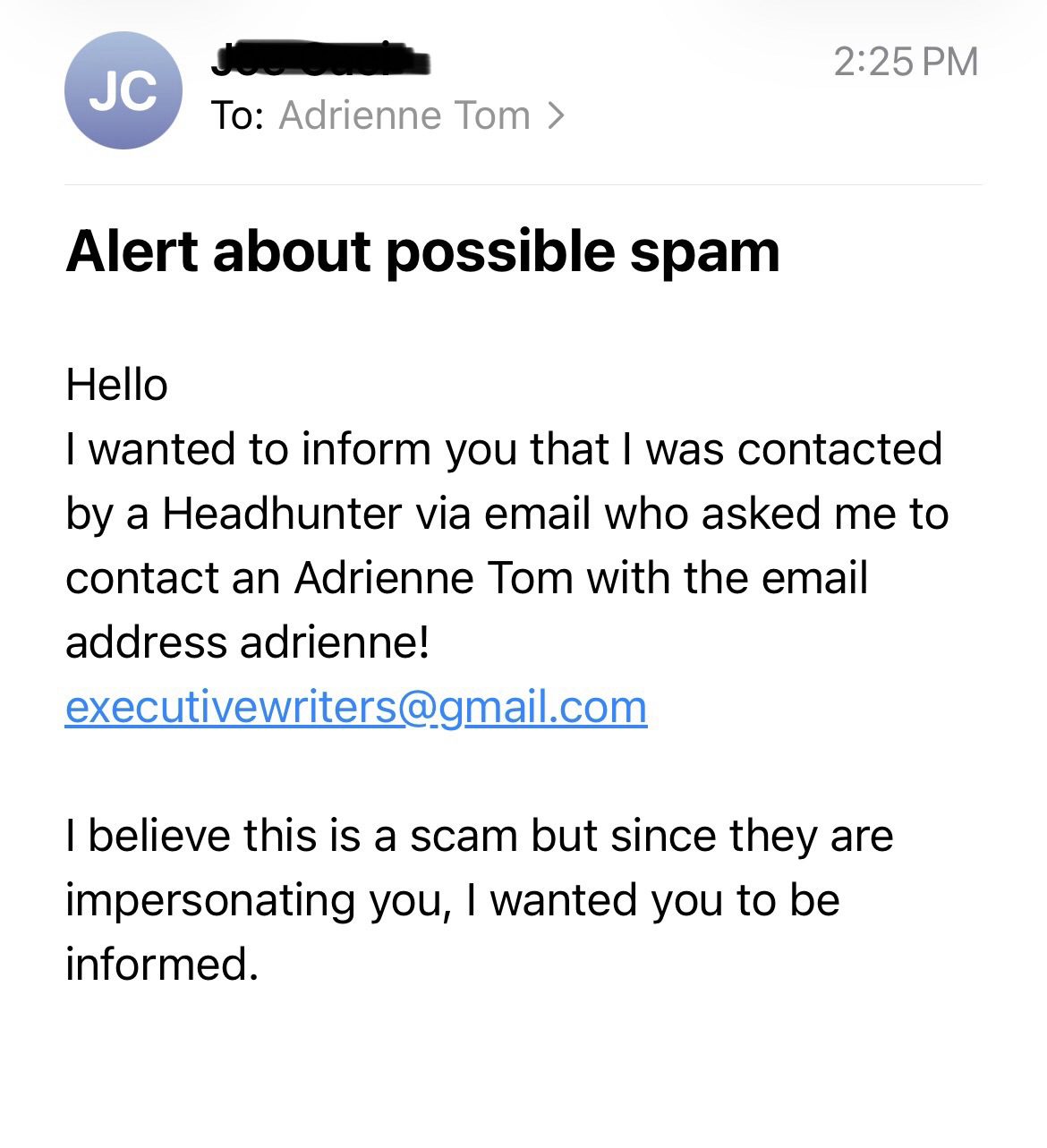
More Scams Using My Name (Beware!)
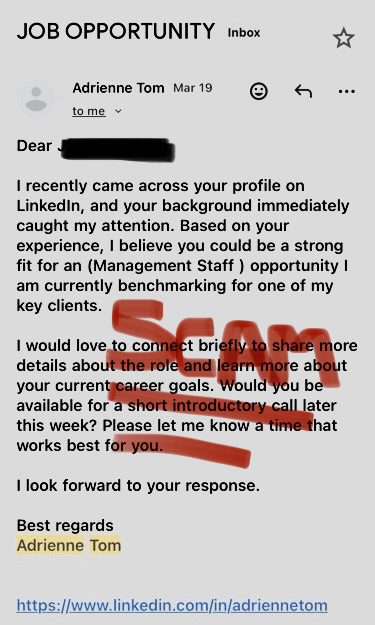
Sadly, this may be a section I have to keep adding to and updating as more scams using my name come to light. Anything shown below is a warning and not from me! Thank you to the diligent job seekers who are sharing these screenshots and updates with me.
Share this post: